


RBKC Window Rules for Traditional Sash Windows

Open a traditional sash window and you set in motion a piece of engineering that has changed remarkably little since the late 17th century. Behind the smooth glide of the glass sits a hidden system of weights, cords and pulleys, all housed within a hollow timber frame that gives the box sash its name. Understanding how these parts fit together is genuinely useful, whether you are restoring period windows, planning replacements, or specifying timber joinery for a project.
We have manufactured and installed traditional timber sash windows from our Surrey workshop since 1999, so the components described below are not theory to us. We cut, joint, hang and fit them, which means we tend to know not only what each part is called but how it behaves over decades in a real building. This guide walks through every part of a box sash window, with a labelled diagram, and finishes with the questions homeowners and specifiers most often ask us.
What is a box sash window?
A box sash window is a vertically sliding window in which the moving panels, the sashes, are counterbalanced by hidden weights. Those weights hang inside a hollow timber frame, the “box”, concealed within the wall reveal on each side. As you raise or lower a sash, the weights travel in the opposite direction, taking the strain so the window stays wherever you leave it.
This distinguishes a true box sash from a more modern spring-balanced sash, which achieves the same balancing effect with a compact spiral mechanism and no box. Both are sliding sash windows; only the box sash carries the traditional weight-and-pulley system that defines period properties.
The parts of a sash window: a labelled diagram
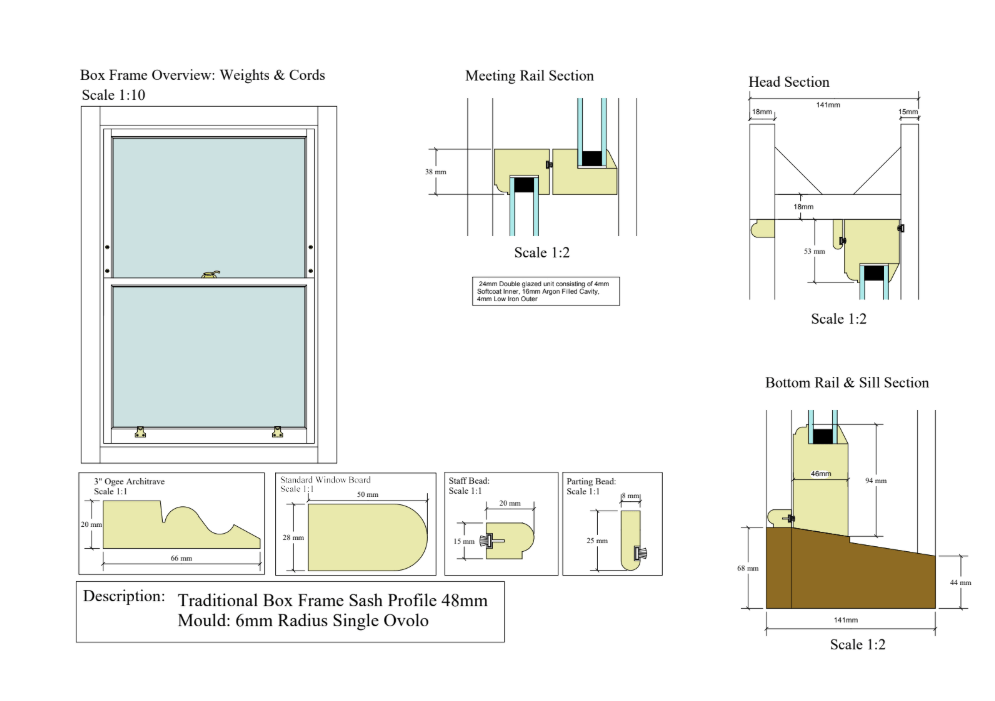
Above: the principal parts of a traditional timber box sash window.
A sash window is divided into two halves: the fixed box frame built into the wall, and the moving sashes that slide within it. Almost every part name describes a piece of one or the other.
Two parts cause the most confusion, so it is worth naming them up front. The vertical strip running up the middle of the opening, separating the two sashes so they can pass each other, is the parting bead. The horizontal bars that come together in the centre when the window is closed are the meeting rails. Everything else sits around these.
The box frame
The box frame is the fixed, structural part of the window, built into the masonry opening. Its hollow sides are what make the counterweight system possible.
- Head: the horizontal timber across the top of the frame, which carries the load above and houses the pulleys.
- Jambs: the vertical sides of the frame. Each jamb is hollow, forming the cavity in which a pair of sash weights rises and falls.
- Sill: the sloping bottom member, weathered to shed rainwater away from the building.
- Parting beads: slender vertical strips set into a groove in each jamb (and across the head), separating the upper and lower sashes so they slide past one another without touching.
- Staff beads: the inner beads fixed around the jambs and head that hold the lower sash in its runner and provide a clean internal finish. Also called the inner bead.
- Pockets: small removable panels low in each jamb that give access to the weight cavity, so cords and weights can be serviced without dismantling the frame.
The box construction is the whole point of this window type. Without those hollow jambs, there is nowhere for the weights to travel, which is why genuine box sashes need a frame of real depth rather than a shallow modern profile.
The sashes
The sashes are the moving timber frames that hold the glass and slide vertically. Each window has two: an upper (outer) sash and a lower (inner) sash. They must be accurately jointed and well-balanced to run smoothly and seal against the weather.
- Stiles: the vertical members forming the sides of each sash.
- Top and bottom rails: the horizontal members. The bottom rail of the lower sash is usually made deeper, both for strength and to sit cleanly on the sill.
- Meeting rails: the rails that meet in the middle when the window is shut. The lower sash meets at its top rail, and the upper sash at its bottom rail, and these are profiled to overlap and seal against draughts.
- Glazing bars: the slender timber dividers that hold individual panes and create the period grid pattern, the six-over-six, two-over-two or one-over-one arrangements typical of different eras. The moulded profile of these bars (ovolo, lamb’s tongue or astragal) is a detail that strongly affects authenticity.
Well-made sashes, properly jointed and finished, hold their shape and run true for decades. Poorly made ones drop, bind and let in weather, which is one reason joinery quality matters far more than it first appears.
How a sash window works: the balance mechanism
The whole window is engineered around one idea: counterbalancing the weight of the glass so the sashes feel almost weightless. There are two principal systems.
Traditional weights, cords and pulleys
This is the classic system found in period properties and faithful reproductions.
- Sash weights: lengths of cast iron (or sometimes lead) hung inside the hollow jambs. Each sash is carried by a pair of weights, one per side, and together they are matched to the weight of the sash so it balances at any height.
- Cords or chains: the sash cord (traditionally waxed cotton or hemp) or chain runs from the side of each sash, over a pulley, down to its weight. Chain is more durable and is often specified where longevity matters.
- Pulleys: brass or iron wheels set into the head of the frame that guide the cords smoothly as the sash moves.
- Pockets: as above, the access points for re-cording and adjustment.
Spiral spring balances
Where a deep box frame is not possible, a spiral (spring) balance does the same job in a fraction of the space. A pre-tensioned spring housed in a slim channel counterbalances the sash without weights or cavities, which suits certain new-build and replacement situations. The trade-off is character: the authentic box sash remains the benchmark for period work.
Ironmongery and fittings
The hardware is where security, weather performance and period character meet. The right ironmongery finishes the window properly; the wrong ironmongery undermines an otherwise faithful restoration.
- Sash fasteners: the catch fitted where the meeting rails join (the Fitch and Brighton patterns are the traditional types), pulling the sashes tightly together for security and a weather seal.
- Sash lifts and pulls: handles or finger lifts on the bottom rail for easy raising.
- Restrictors and stops: discreet hardware that limits opening, often specified for upper-floor windows.
- Window furniture: period-appropriate finishes in brass, chrome or bronze that complete the look.
Draught-proofing
Modern draught-proofing is fitted discreetly into the staff and parting beads and along the meeting rails, using brush or compression seals. Done well, it transforms the thermal comfort of a sash window while remaining invisible from inside the room and leaving the period appearance untouched.
Glazing and weatherproofing
Glazing
- Slim double-glazed units: our replacement timber sashes are typically fitted with slim sealed units, which considerably improve thermal and acoustic performance while maintaining traditional sightlines.
- Heritage single glazing: crown or cylinder glass, with its characteristic light distortion, is reserved for listed buildings and conservation work where authentic materials are required.
- Glazing beads and putty: modern units are held with timber glazing beads, which are durable and removable for future maintenance. Traditional linseed oil putty is still used for heritage glazing where the original method is specified.
Weatherproofing
- Weatherboard: an angled timber moulding fixed to the bottom rail of the lower sash, projecting over the sill to throw rainwater clear of the joint.
- Drip groove: a channel cut into the underside of the sill that stops water tracking back to the wall face.
- Paint or finish system: a microporous, vapour-permeable coating system that protects the timber while allowing it to breathe.
Together, these details keep moisture away from the joints and end grain, which is exactly where neglected timber windows fail first.
Sash window section detail: a note for specifiers
Architects and specifiers searching for section details, jamb details and construction drawings are looking for something the standard homeowner guide rarely provides. As a manufacturer rather than a reseller, we hold the joinery detail behind every component described above, from frame depths and rebate dimensions to ironmongery schedules and glazing specifications.
Common faults and what they reveal
Knowing the anatomy makes diagnosis straightforward. In our experience, the recurring issues are:
- Cord or chain failure: one of the most common faults in older sash windows. Natural-fibre cords perish and snap with age, after which the sash will not stay up. The repair means lifting the staff bead and working through the pocket to re-cord, which is routine work rather than a crisis.
- Putty or bead failure: cracked, missing glazing putty lets water reach the timber and must be made good to keep the window weathertight.
- Paint breakdown: once the coating fails, moisture gets into the joints, so maintaining the finish is the cheapest form of protection.
- Sticking or dropped sashes: usually a sign of paint build-up, swollen timber or a balance problem, all of which are correctable.
- Rot at the sill and lower rail: the lowest, most exposed timbers fail first, and catching it early is the difference between a repair and a replacement.
Restoration or replacement?
A well-made box sash, properly maintained, can last generations, and individual parts can be repaired or replaced without rebuilding the whole window. The right course depends on the condition of the timber and what you need the window to do.
Because we both manufacture and install, you are dealing with a single team from survey to fitting. There is no supplier to blame and no fitter passing the work elsewhere; the people who make your windows are accountable for how they perform. Where the existing timber is sound, restoration and discreet draught-proofing may be all you need. Where decay is widespread, upgrading to double-glazed replacement sashes, or full bespoke sliding sash windows made to match the originals, restores both performance and appearance. In a conservation area, authentic detailing is not optional, which is exactly where a specialist manufacturer earns its place.
Frequently asked questions
What is a box sash window? A vertically sliding window whose sashes are counterbalanced by weights hidden inside a hollow timber frame, the box. The weights, cords and pulleys allow the sashes to be raised or lowered and held at any height.
What are the parts of a sash window called? The fixed outer frame comprises the head, two jambs and the sill, with parting and staff beads. The moving sashes are made of stiles, top and bottom rails, meeting rails and glazing bars. The balance system uses weights, cords or chains, and pulleys.
What is the vertical strip in the middle of a sash window? That is the parting bead, the slender strip that separates the upper and lower sashes so they can slide past each other.
What are the horizontal bars where the two sashes meet? The meeting rails. They overlap and seal when the window is closed, and usually carry the sash fastener.
How does a sash window stay open at any height? The hidden weights (or a spiral spring balance) are matched to the weight of each sash, so the two balance and the window holds its position.
Can individual parts of a sash window be replaced? Yes. Cords, beads, pulleys, weights and glazing can all be renewed individually, which is one of the great advantages of traditional timber construction over sealed modern units.
This guide is intended as general information. Before carrying out work on windows in a listed building or conservation area, always confirm your property’s planning status with the local authority, and choose an installer who can evidence genuine joinery and heritage experience.
For advice on sash window restoration or bespoke timber replacements, speak to the team that makes and fits every window we supply. Call us on 0800 389 7384
Related posts


